
Westerville Resident Record Coverage
No official list gathers every Westerville resident in one place. Every official source answers a limited question instead. A property roll shows an owner, parcel, situs address, tax mailing clue, and transfer history. Yet it cannot prove who occupies a home. A docket identifies a case party and its status. Vital indexes point to an event, and a credential record confirms a public professional association. A careful resident lookup keeps those boundaries intact. Rather than stretching one record past its purpose.
| Record | What It Confirms | Where | Access |
|---|---|---|---|
| County property roll | Owner, parcel, situs, mailing clue, and transfer detail | Franklin Auditor or Delaware Auditor GIS | Current parcel information |
| Voter record | Registration and precinct context after identity checks | Ohio My Voter Information | Public record with protected fields |
| Court or probate docket | Case party, number, type, dates, and disposition | Correct county court or clerk | Public index subject to restrictions |
| Vital index | Name, event, date, or relationship lead | Probate or Ohio History Connection | Index differs from certified copy |
| Business or license record | Public filing or credential association | Ohio state search portals | Not proof of residence |
Begin with the narrowest record that fits the question. For a current owner clue, use the correct county auditor. A known citation or case belongs in that court's own search. A death or marriage lead calls for the event county and year first. When the question is who lived along an address, use the Westerville streets directory. It carries the parcel-led method. One source should never settle a same-name question alone.
Westerville Resident County Check
Westerville sits in both Franklin and Delaware counties. That fact is the first control in any resident lookup. A Westerville mailing address alone does not choose the recorder, probate court, board of elections, or court search for you. Check the parcel result, citation, deed, case caption, or event location for its county first. Franklin and Delaware each run separate judicial and land systems. Keep the county with the name. That stops a Franklin case or voter detail from being pinned on a Delaware County resident with a similar name.
The Westerville Mayor's Court eServices search is a separate city-court starting point for eligible local matters. Its public access route appears on the official page. Court venue still depends on the event and case type.
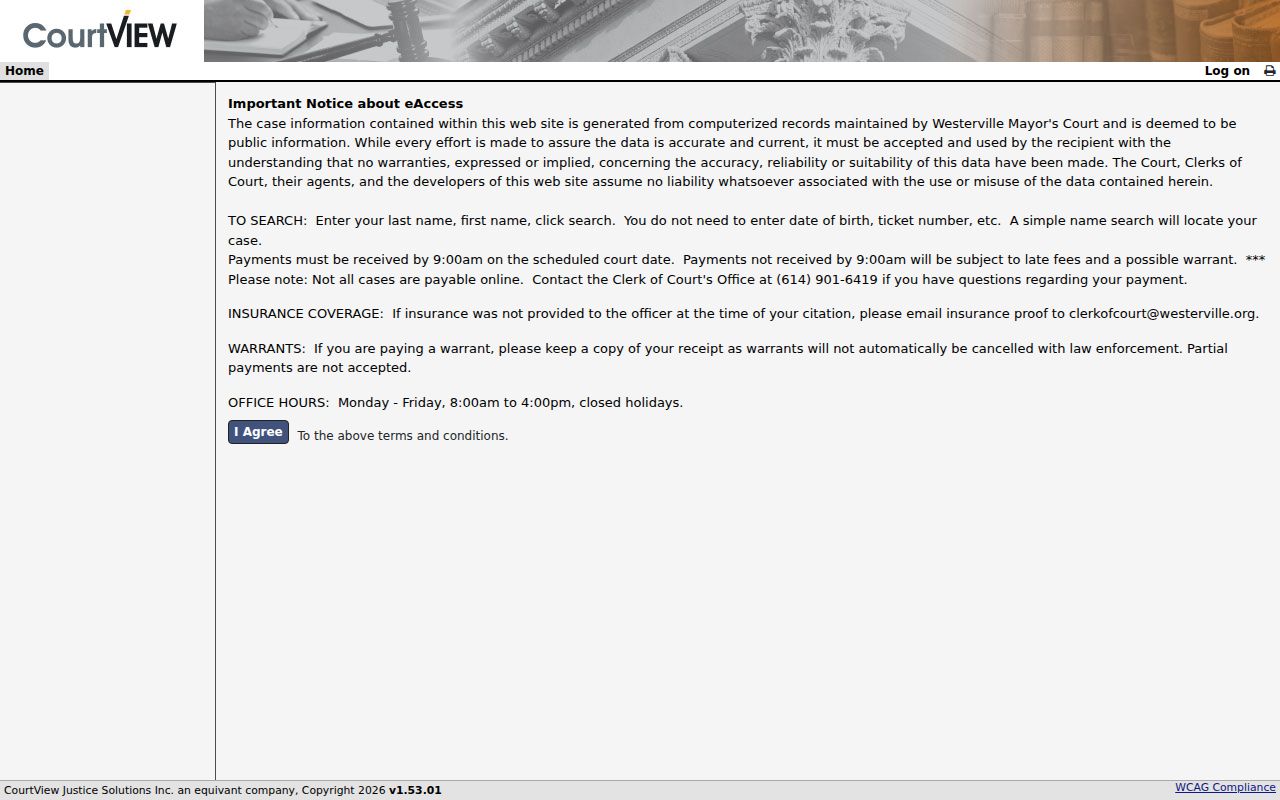
Read a Mayor's Court result with its case number and court label close at hand. It is no substitute for county Common Pleas, municipal, probate, or federal docket searches.
Westerville Court Records Check
For a Franklin County municipal matter, use the court's public case search. Search with a name or a known case or ticket number. The name route requires both a first and last name. Optional fields can narrow a result. These include middle name, date of birth, party type, case type, year, and status. A case number combines a year, a three-letter code, and a six-digit sequence. Keep any ticket letters intact. A closed case is not necessarily a completed or adjudicated one.
| Search field | How the Franklin form uses it |
|---|---|
| Last and first name | Both are required for a person-name search; a middle initial can help narrow it. |
| Case or ticket number | Either is an alternative starting route; retain letters in a ticket number. |
| Date of birth | Optional, formatted MM/DD/YYYY; use only to disambiguate a known person. |
| Type, year, and status | Optional controls that reduce a broad result set. |
The Franklin County Municipal Court publishes its official court-search form for public use.
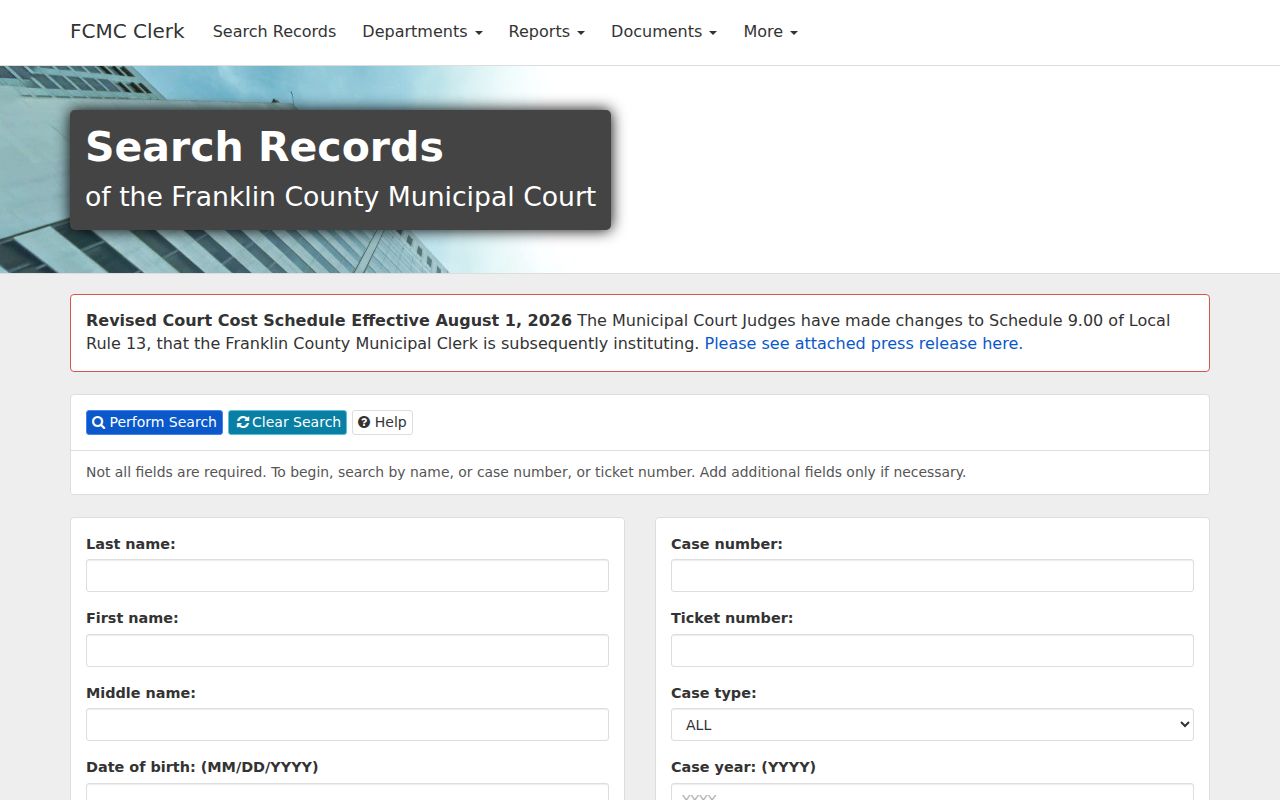
Treat search results as leads for verification. They are not conclusions about a person. A Delaware County matter belongs in the county's eServices search, which supports case number, type, name, attorney, and ticket or citation routes. Sealed, juvenile, adoption, and other protected material must stay protected.
A useful docket note records the court and division, case number, indexed party name and role, attorney, case category, filing and event dates, docket entries, disposition or status, and whether a public document link appears. That inventory lets a second researcher check the same record without copying sensitive facts.
Westerville Voter Record Timing
Ohio's voter tools serve different purposes. Franklin's individual lookup requires first name, last name, birth year, house number, and a verification checkbox. It is not a reverse street search. A nonmatch can reflect a different county, a move, a name variation, routine list maintenance, or a protected record. Never infer the reason. Registration data is public under R.C. 3503.15, while confidential and identifying fields remain protected.
For dated research, the Secretary of State's DATA Act portal is available. It lets users request daily county voter-registration snapshots. Pick the election and a start and end date no more than seven days apart. Then choose Franklin or Delaware in the county list. Snapshots are retained for at least 22 months. That state system helps compare an official record at a specific time. It is not a tool for guessing a person's political views or ballot choices.
Note: Records processed after the daily 4 p.m. snapshot may not appear until the next day.
Verifying a Westerville Resident
To look up a resident by name, build a short chain of independent facts rather than a broad profile. The strongest chain often combines a county, a parcel or event date, and a name variant. Add a case, estate, or credential number too. Treat the tax mailing address and the physical parcel address as separate facts. If they conflict, keep both. Let the custodian record explain the difference. The same rule covers maiden names, initials, and spouses named in older records.
- Search the appropriate auditor for an owner-name or address result and record the county, parcel number, situs, mailing clue, and transfer date.
- Use that county and a name variation in the appropriate court or probate index. Save the case number, party role, and date range rather than assuming a same-name match.
- When an event is relevant, compare a marriage or death-index lead with the person, county, and approximate year already established.
- Request a record or certified copy from its actual custodian only when the question requires it. A narrow request should state the record type, time span, case, parcel, or event detail.
- Docket
- The court's running list of filings, hearings, and case events. It identifies a case but does not promise every image is public.
- Index versus image
- An index is a searchable record of fields such as names and dates. An image is the document view, which may be absent, restricted, or available through a separate channel.
- Certified copy
- A copy issued and authenticated by the keeper of the original record for the purpose that requires certification.
Anchor the search to the question you are actually asking. For property owners, a name paired with the county and parcel works best. It beats the mailing city every time. For a court event, reach for the case number or the event year first. Match the record type to the question. Then note which fields line up cleanly and which ones stay uncertain.
Westerville Probate Record Trails
An heir trail should start with an event record, never a guessed relationship. Obituaries and cemetery entries can hand you a date. Death-index results add a county, a spouse, or a burial clue to work from. From there, search the probate court in the county where the estate was filed. Franklin Probate holds estate, guardianship, and name-change records from 1898 forward. Marriages go back to 1803. Most electronic images date from August 2, 1998, forward. An estate file can name a fiduciary and the parties in the filed papers. What it cannot do is show where every relative lives now. The Franklin Probate general case search is the official entry point for that docket path.
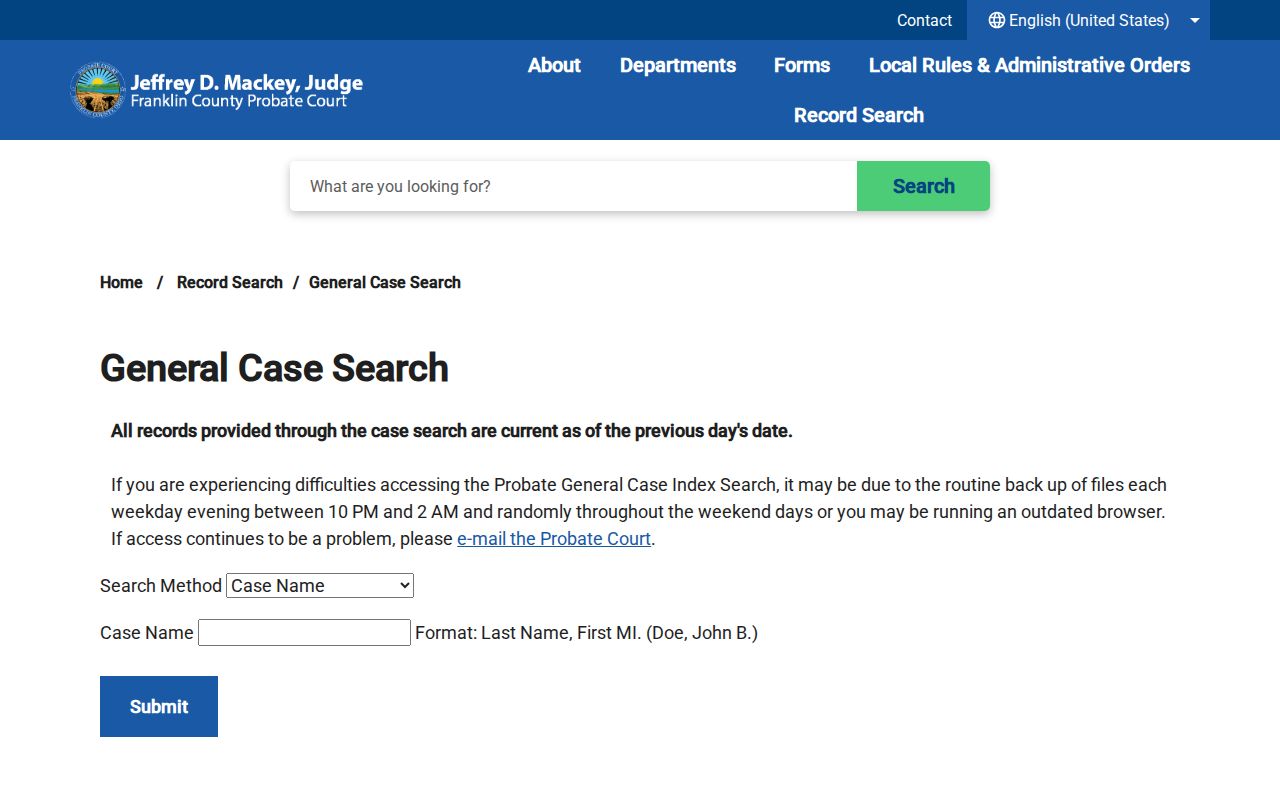
A Franklin marriage abstract requires both applicants' names and at least an approximate year. The court accepts online, mail, and in-person requests for certified copies. Its published fee is $2 per certified abstract, plus postage or an online service fee. For death research, the Ohio Death Record Index works as a free lead. Its coverage has gaps, though. It is not a complete certificate collection. The event year decides which custodian is the right one.
Westerville Affiliation Record Checks
Ohio's official business and license searches can corroborate a public affiliation. Neither one is a resident roster. The Ohio Secretary of State Business Search ties an entity to its filing number. It also lists the statutory agent or registrant, filing date, and status. Keep one caution in mind. A statutory-agent address is a service address, not proof of anyone's home. eLicense Ohio is the stronger tool when you already know a credential or licensing board. Compare a middle initial, the board, and license number. Check status and dates too before linking a result to a person. The public eLicense Ohio search is the credential-verification route for that step.
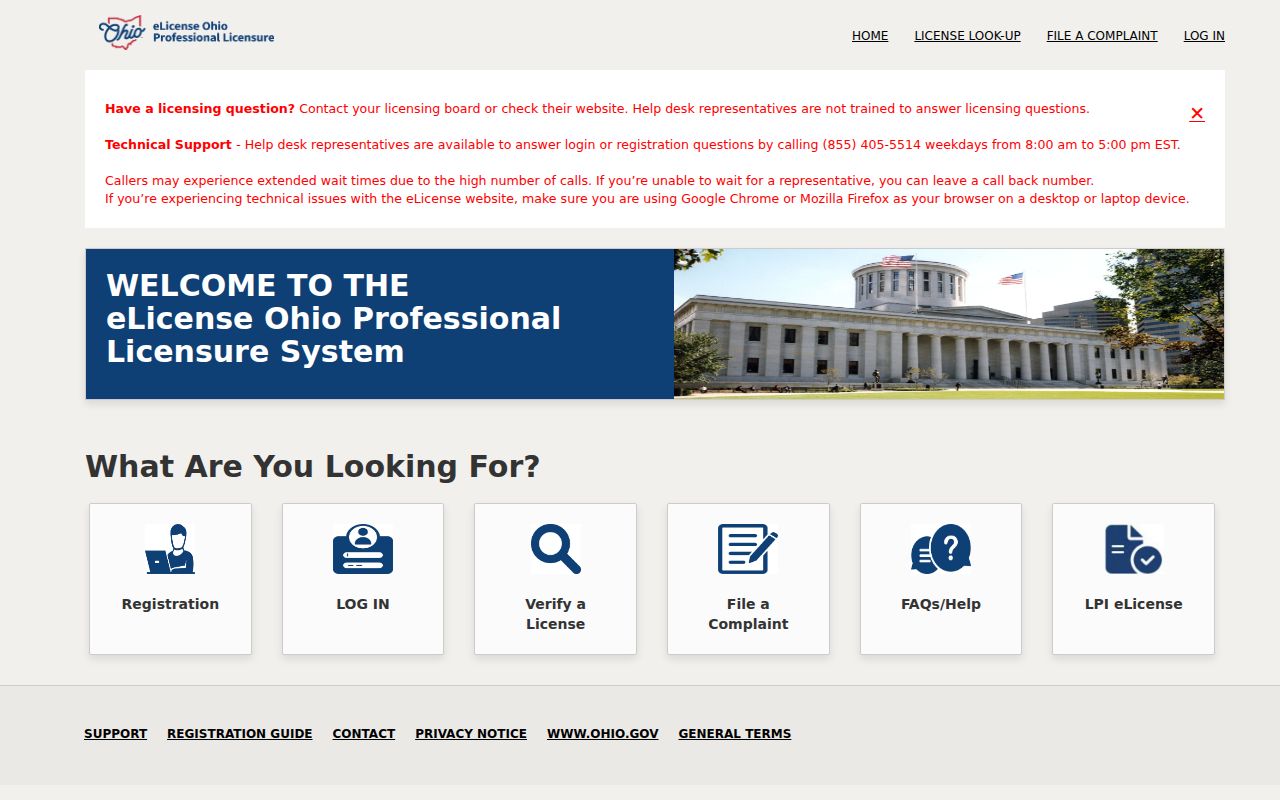
A city or state listed beside a credential may simply mark a business or practice location. Treat it as an affiliation clue. Cross-check it against an independent official record before drawing any conclusion.
Westerville Resident Name Controls
Same-name mistakes happen a lot in Westerville. One ZIP or mailing city can span two counties. Compare at least three independent details before treating records as one person: full, middle, maiden, or prior name; county; parcel legal description; an age range without republishing a full date of birth; case number; spouse; professional-license number; or a solid citation. A familiar surname inside the same postal code is not enough. A record may show a different address. Preserve the conflict rather than picking the convenient entry. The state Ohio DRC Offender Search shows why scope matters. Check scope before any name match is trusted. It covers people currently incarcerated in Ohio prison, under DRC supervision, or judicially released. It does not cover every Westerville resident or every court matter.
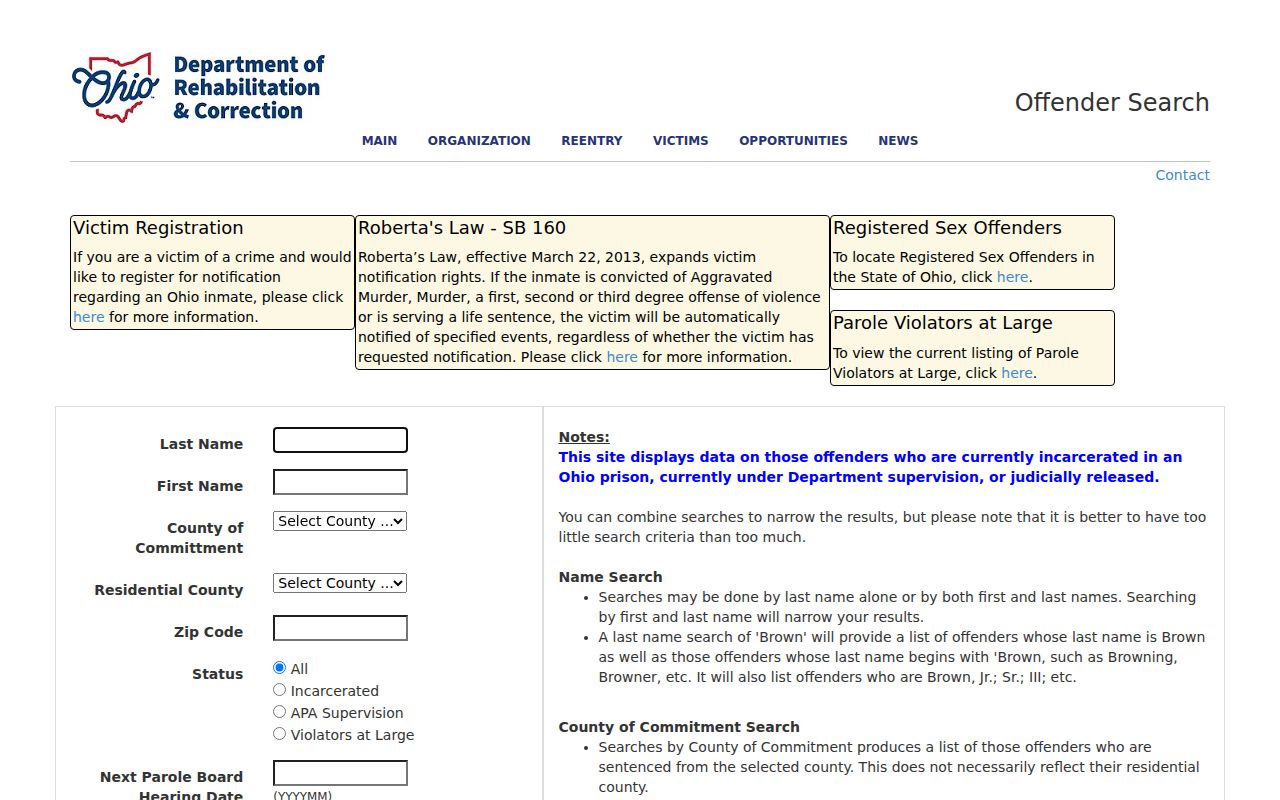
The form's status choices and county fields narrow it to a defined population. A missing result says only that the person falls outside the tool's stated scope. It does not mean no public record exists.
Westerville Record Correction Routes
Take a factual error to the office that maintains the record. Parcel inventory problems go to the Auditor. Recorded-document procedures go to the Recorder. Registration issues belong to the Board of Elections. Docket or case matters go to the Clerk or Court. When a record is not online, Ohio's Public Records Act backs a narrow request for existing records. Name the office. Name the record type. List the date range and any known case, parcel, or address. A public office can explain how it maintains the record. It must also separate exempt material from releasable material. Westerville city records follow the City's Clerk of Council and department procedures. Police Records runs its own handling path. Ask for the actual record, never a newly created profile or open-ended research service.
Westerville Lookup Privacy Limits
Ohio public-record access has firm limits. The Safe at Home Address Confidentiality Program shields eligible participants through substitute-address handling. A suppressed address is not a gap to work around. DMV information is not an ordinary public people list. Utility customer information is not either. Court restrictions can cover sealed, juvenile, adoption, mental-health, victim, and redacted material. Ohio's online-record redaction process under R.C. 149.45 targets specified sensitive information online. It does not delete a valid underlying deed or court record.
Lawful use. Use a Westerville resident lookup for personal, lawful research, family history, estate work, or verifying an official record. Do not use information to stalk, harass, intimidate, or harm another person; Ohio's R.C. 2903.211 and R.C. 2917.21 address stalking and telecommunications harassment.
When a result is absent or redacted, respect that boundary. Confirm only with the office holding the underlying record. A restricted address or sealed file is not evidence that a person does not exist. It is also not a reason to hunt for a substitute source.